This is a Japanese vocabulary list of Noun(s) you need to know in order to pass the JLPT N4.
Click on any of the words below to see the full vocabulary lesson, including example sentences.
References:
Download PDF of N4 nouns list (for members only)
| # | 名詞 | Noun | Meaning |
|---|---|---|---|
| 101 | 一生懸命 | isshoukenmei いっしょうけんめい | very hard; with utmost effort |
| 102 | 糸 | ito いと | thread |
| 103 | ジャム | jamu | jam |
| 104 | 字 | ji じ | character |
| 105 | 時代 | jidai じだい | period |
| 106 | 事故 | jiko じこ | accident |
| 107 | 事務所 | jimusho じむしょ | office |
| 108 | 神社 | jinja じんじゃ | Shinto shrine |
| 109 | 人口 | jinkou じんこう | population |
| 110 | 人生 | jinsei じんせい | human life |
| 111 | 地震 | jishin じしん | earthquake |
| 112 | 辞典 | jiten じてん | dictionary |
| 113 | 自由 | jiyuu じゆう | freedom |
| 114 | 女性 | josei じょせい | woman; female |
| 115 | 準備 | junbi じゅんび | to prepare |
| 116 | 十分 | juubun じゅうぶん | enough; sufficient; plenty; adequate; satisfactory |
| 117 | 柔道 | juudou じゅうどう | judo |
| 118 | 住所 | juusho じゅうしょ | address |
| 119 | カーテン | kaaten | curtain |
| | |||
| 120 | 壁 | kabe かべ | wall |
| 121 | 課長 | kachou かちょう | section manager; section chief |
| 122 | 帰り | kaeri かえり | return; coming back |
| 123 | 科学 | kagaku かがく | science |
| 124 | 鏡 | kagami かがみ | mirror |
| 125 | 海岸 | kaigan かいがん | coast |
| 126 | 会議 | kaigi かいぎ | meeting; conference; session; assembly |
| 127 | 会議室 | kaigishitsu かいぎしつ | conference room; conference hall; council room |
| 128 | 会場 | kaijou かいじょう | assembly hall; meeting place; venue; grounds |
| 129 | 会話 | kaiwa かいわ | conversation |
| 130 | 火事 | kaji かじ | fire |
| 131 | 格好 | kakkou かっこう | appearance |
| 132 | 髪 | kami かみ | hair |
| 133 | 家内 | kanai かない | (my) wife; inside the home; one's family |
| 134 | 看護婦 | kangofu かんごふ | female nurse |
| 135 | 関係 | kankei かんけい | relationship |
| 136 | 簡単 | kantan かんたん | simple; easy |
| 137 | 形 | katachi かたち | shape |
| 138 | 代わり | kawari かわり | instead; in place |
| 139 | 毛 | ke け | hair or fur |
| 140 | ケーキ | keeki | cake |
| 141 | 怪我 | kega けが | to injure |
| 142 | 計画 | keikaku けいかく | to plan |
| 143 | 経験 | keiken けいけん | to experience |
| 144 | 警察 | keisatsu けいさつ | police |
| 145 | 経済 | keizai けいざい | finance, economy |
| 146 | 見物 | kenbutsu けんぶつ | sightseeing; visit |
| 147 | 喧嘩 | kenka けんか | to quarrel |
| 148 | 研究 | kenkyuu けんきゅう | research |
| 149 | 研究室 | kenkyuushitsu けんきゅうしつ | laboratory |
| | |||
| 150 | 消しゴム | keshigomu | eraser |
| 151 | 景色 | keshiki けしき | scenery |
| 152 | 気 | ki き | spirit |
| 153 | 気分 | kibun きぶん | feeling; mood |
| 154 | 機会 | kikai きかい | chance; opportunity |
| 155 | 危険 | kiken きけん | danger |
| 156 | 気持ち | kimochi きもち | feeling |
| 157 | 着物 | kimono きもの | kimono; Japanese traditional clothing |
| 158 | 近所 | kinjo きんじょ | neighbourhood |
| 159 | 絹 | kinu きぬ | silk |
| 160 | 季節 | kisetsu きせつ | season |
| 161 | 汽車 | kisha きしゃ | train |
| 162 | 規則 | kisoku きそく | rule |
| 163 | 子 | ko こ | child |
| 164 | 心 | kokoro こころ | heart |
| 165 | 国際 | kokusai こくさい | international |
| 166 | 米 | kome こめ | (husked grains of) rice |
| 167 | 今度 | kondo こんど | this time; next time |
| 168 | この間 | kono aida このあいだ | the other day; recently |
| 169 | このごろ | kono goro | these days; nowadays |
| 170 | コンピュータ | konpyuuta | computer |
| 171 | コンサート | konsaato | concert |
| 172 | 今夜 | konya こんや | this evening; tonigh |
| 173 | 故障 | koshou こしょう | to break-down |
| 174 | 答え | kotae こたえ | response |
| 175 | 小鳥 | kotori ことり | small bird |
| 176 | 校長 | kouchou こうちょう | principal; headmaster |
| 177 | 講堂 | koudou こうどう | auditorium |
| 178 | 郊外 | kougai こうがい | suburb; residential area on the outskirt of a city |
| 179 | 講義 | kougi こうぎ | lecture |
| | |||
| 180 | 工業 | kougyou こうぎょう | industry |
| 181 | 工場 | koujou こうじょう | factory |
| 182 | 高校 | koukou こうこう | senior high school; high school |
| 183 | 高校生 | koukousei こうこうせい | high school student |
| 184 | 公務員 | koumuin こうむいん | government worker |
| 185 | 高等学校 | koutougakkou こうとうがっこう | high school |
| 186 | 交通 | koutsuu こうつう | traffic |
| 187 | 首 | kubi くび | neck |
| 188 | 雲 | kumo くも | cloud |
| 189 | 草 | kusa くさ | grass |
| 190 | 空気 | kuuki くうき | air |
| 191 | 空港 | kuukou くうこう | airport |
| 192 | 客 | kyaku きゃく | guest; customer |
| 193 | 教育 | kyouiku きょういく | education |
| 194 | 教会 | kyoukai きょうかい | church; congregation; Christian church |
| 195 | 興味 | kyoumi きょうみ | interest (in something); curiosity (about something); zest (for) |
| 196 | 競争 | kyousou きょうそう | competition |
| 197 | 急行 | kyuukou きゅうこう | hurrying (to somewhere); rushing; hastening |
| 198 | 漫画 | manga まんが | comic |
| 199 | 真ん中 | mannaka まんなか | middle; centre; center |
| 200 | 周り | mawari まわり | around |
JLPT N4 vocab List total: (363)
Currently viewing page 2 of 4
JLPT N4 Study Guide
JLPT N4 Grammar Master [e-book]
Complete Study Guide

This e-book includes every grammar point you need to know in order to pass the JLPT N4, with detailed usage notes and numerous example sentences.
Pages: 293.
Grammar lessons: 131.
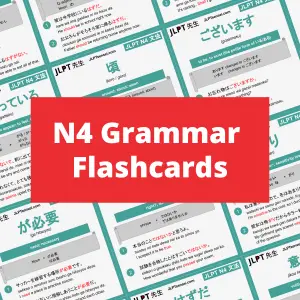
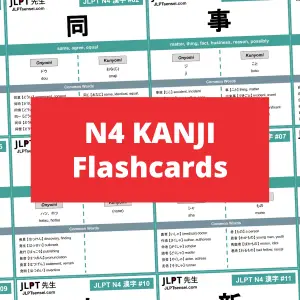
N4 Flashcards
*NOTE* Officially, there are no kanji, vocabulary, or grammar lists for the JLPT. As a result, it is not possible to be certain which kanji, words, or grammar will or will not appear in a given test. Our study lists are based on prior test data and comparisons with other available lists of JLPT kanji, vocabulary, grammar, etc.